How Grading Affects Card Value
Professional grading can dramatically increase your Pokemon card's value—or be a waste of money. This guide helps you understand when grading makes financial sense and what returns to expect.
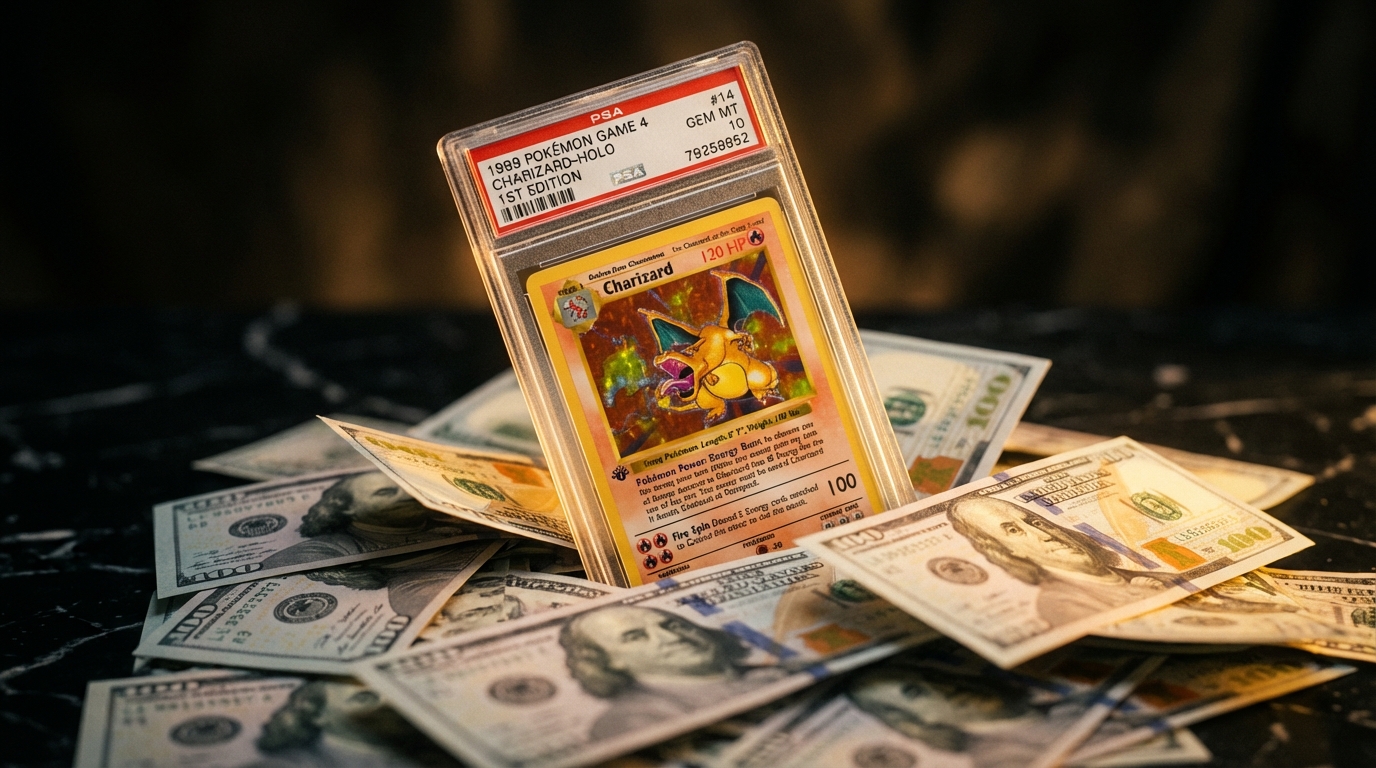
Value Multipliers by Grade
Higher grades command exponentially higher prices. The jump from PSA 9 to PSA 10 is typically the most significant, often representing a 2-5x price difference.
| Grade | Value vs Raw |
|---|---|
| PSA 10 | 10-100x |
| PSA 9 | 3-10x |
| PSA 8 | 1.5-3x |
| PSA 7 | 1-1.5x |
| PSA 6 & below | 0.5-1x |
Important: These multipliers are averages. Actual value depends on the specific card, its rarity, population reports, and current market demand. Vintage cards tend to have higher multipliers than modern cards.
PSA Grading Costs (2026)
Grading costs vary by turnaround time. Factor these costs into your ROI calculation before submitting cards.
Economy
$25Regular
$75Express
$150Super Express
$300+* Prices as of January 2026. Additional fees may apply for declared values over certain thresholds. Third-party submission services (like GameStop) may offer lower rates.
Real ROI Examples
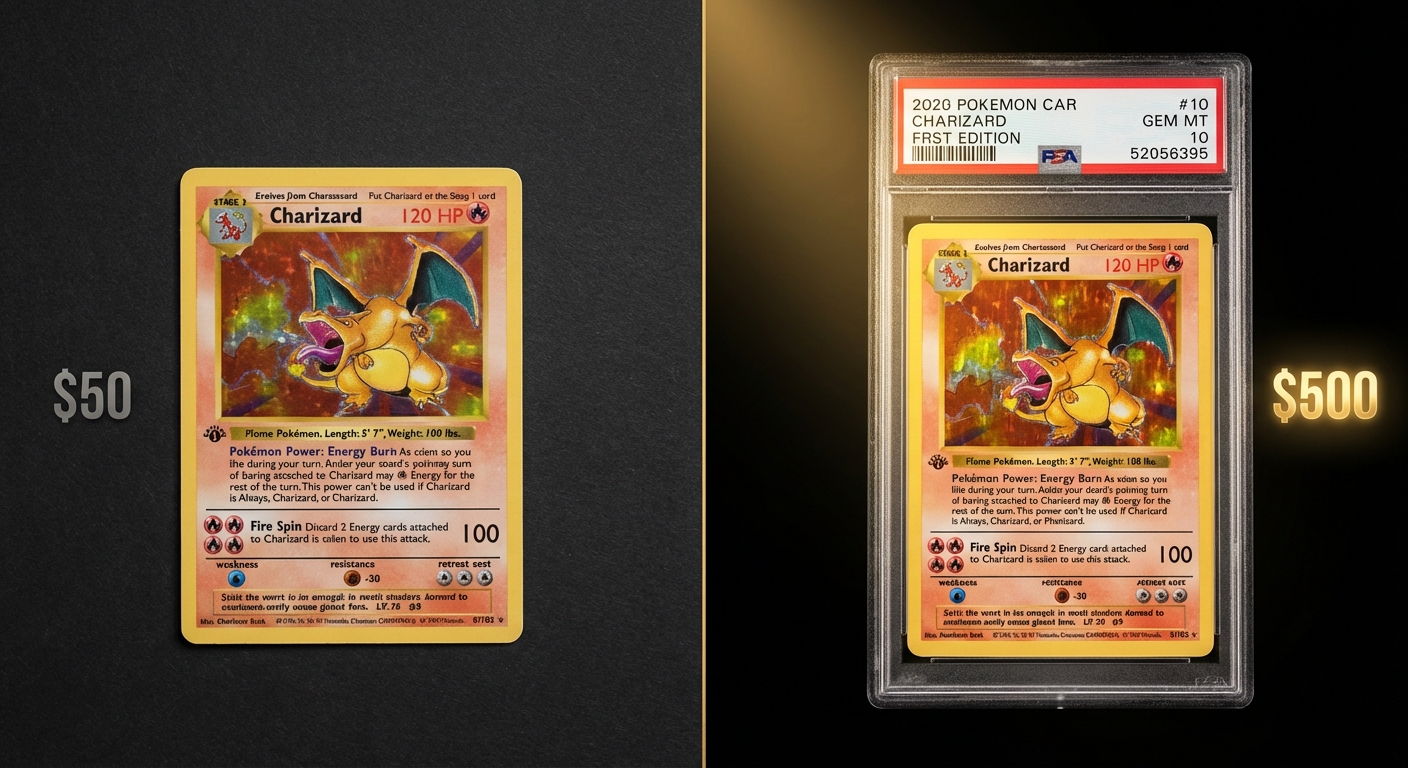
Here's how grading affects value for different types of cards. Remember: these assume a PSA 10 grade, which only ~2-5% of cards achieve.
| Card | Raw Price | PSA 10 | Worth It? |
|---|---|---|---|
| Charizard Base Set (1st Ed) | $3,000-5,000 | $300,000-420,000+ | Yes |
| Modern Charizard ex SAR | $80-120 | $400-800 | Yes |
| Common Base Set Card | $0.50-2 | $10-30 | No |
| Ultra Rare (Modern Set) | $15-30 | $50-100 | Maybe |
Why Population Reports Matter
PSA population reports show how many cards have received each grade. Low populations = higher scarcity = higher prices. Always check the pop report before grading.
Low PSA 10 Pop (<100)
Strong buy signalHigher premiums due to scarcity
Medium Pop (100-1,000)
Fair valueStandard market pricing
High Pop (1,000+)
Consider alternativesSmaller price multipliers
Should You Grade Your Card? Checklist
- ✓Raw value is $50+: Grading costs eat into profits for cheaper cards.
- ✓Card is PSA 9-10 quality: Be honest. Most collectors overestimate their grades.
- ✓PSA 10 is significantly more valuable: Check recent sales—sometimes the gap isn't worth the risk.
- ✓Population is low: Low-pop cards have more upside potential.
- ✓You can afford to wait: Economy service takes 45+ days. Don't need the money now.
Frequently Asked Questions
How much does PSA 10 increase card value?
A PSA 10 grade typically increases card value by 10-100x compared to raw. For vintage cards like 1st Edition Base Set, the multiplier can be even higher. Modern cards typically see 2-10x increases.
Is PSA grading worth the cost?
Grading is worth it for cards valued over $50-100 raw that have a realistic chance of getting a 9 or 10. Grading costs $25-150+ depending on service level. Calculate if potential value increase exceeds grading costs before submitting.
What percentage of cards get PSA 10?
Only about 2-5% of submitted cards receive a PSA 10 grade. Modern cards from recent sets have higher PSA 10 rates due to better quality control. Vintage cards rarely achieve PSA 10 due to age-related wear and centering issues.
Calculate Your Card's Value
Check current prices for raw and graded cards in our database. Make informed decisions about which cards to grade.